Does the lower level of a hillside or earth-berm home count as square footage?
Published August 27, 2026
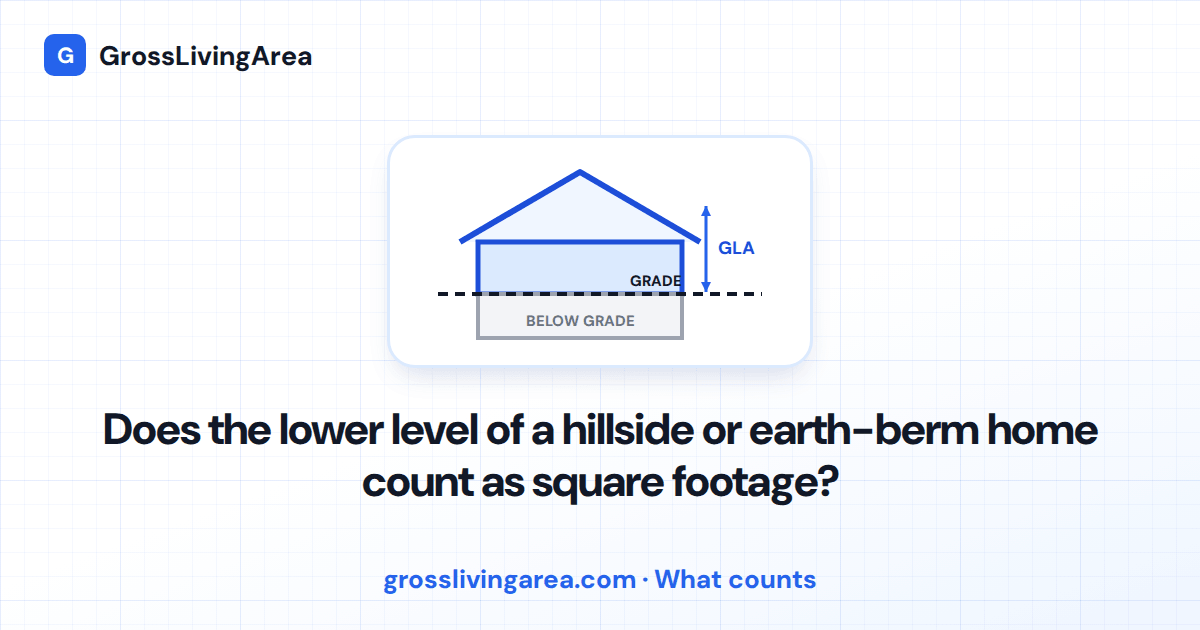
The all-sides rule on a slope
It only takes one side, and it only takes an inch. ANSI has no minimum depth, so a level that is 1 inch below the finished ground on the uphill side is below grade in its entirety. A lower level with a 20-foot wall of glass facing the view and a retaining wall of dirt on the back is below grade. The ANSI rule is deliberately blunt so that every measurer gets the same answer. The same test puts every walkout basement below grade.
When the lower level is really above grade
Some hillside houses are built on piers or stepped foundations so that the lower level sits fully above the finished ground on all sides, with crawl space or open air beneath the uphill edge. That level is above grade and counts. The appraiser has to look at the actual ground line on each side, not the house style.
How hillside markets value the lower level
In neighborhoods where nearly every house steps down the slope, buyers and agents rarely think of the lower level as a basement. It is a lower level, with the same finishes and the same view as the main floor, and sales show buyers paying about the same per square foot for it. The appraiser still reports it as below-grade finished area under ANSI, but supports an adjustment equal to above-grade space when the local sales prove that is what the market pays. The square footage line and the value conclusion are two different things. A finished basement in a hillside market is handled the same way.