Does a Cape Cod second floor count as square footage?
Published August 27, 2026
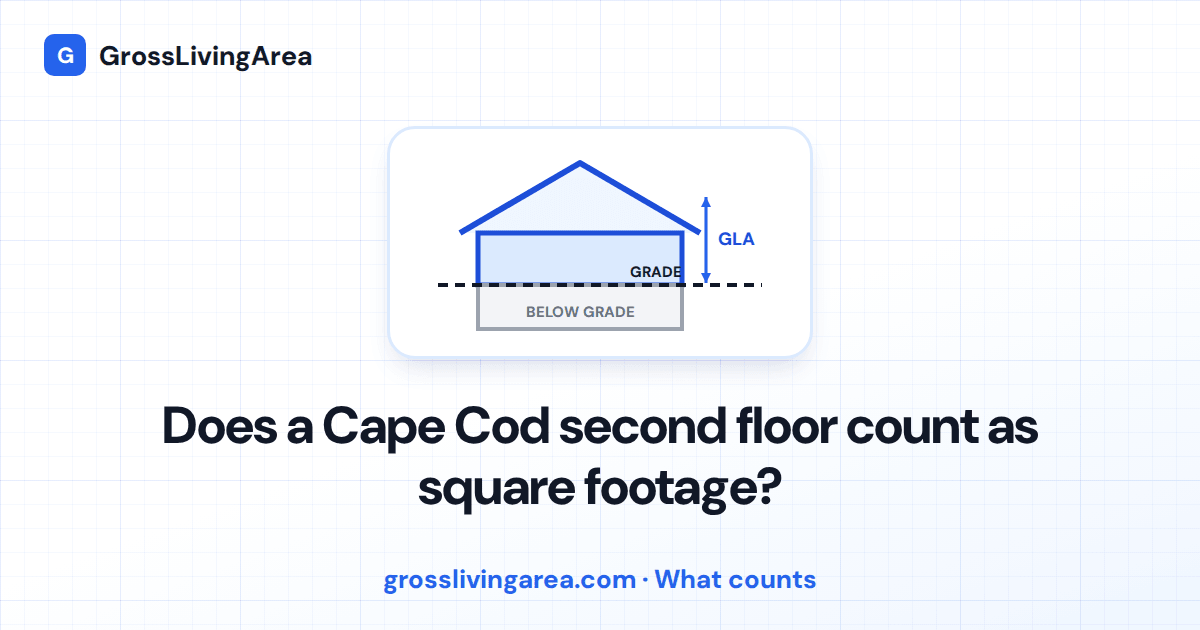
Partly. A Cape Cod's second floor sits under the roof slope, so ANSI Z765's sloped-ceiling rule applies: at least half the finished floor area must have a 7-foot ceiling, and only the area with 5 feet or more of headroom counts. A typical Cape loses 20 to 35% of its upstairs footprint to the knee walls; dormers win some of it back.
Why the upstairs is smaller than the downstairs
The first floor is measured to the exterior walls. The second floor is measured to where the ceiling hits 5 feet, which is well inside the exterior walls on both eave sides. A 30 by 26 foot Cape (780 sq ft down) commonly measures 500 to 620 sq ft up. The sloped-ceiling rule behind those numbers is the same one that governs every attic-type space in the What counts guide.
Dormers
A shed dormer across the back raises the ceiling over its whole width to full height, which both adds countable area and helps the room clear the half-at-7-feet test. Small gable dormers add only their own footprint.
Knee walls cut into a bonus room over a garage the same way, and a finished attic with no dormers is the same math with less headroom.